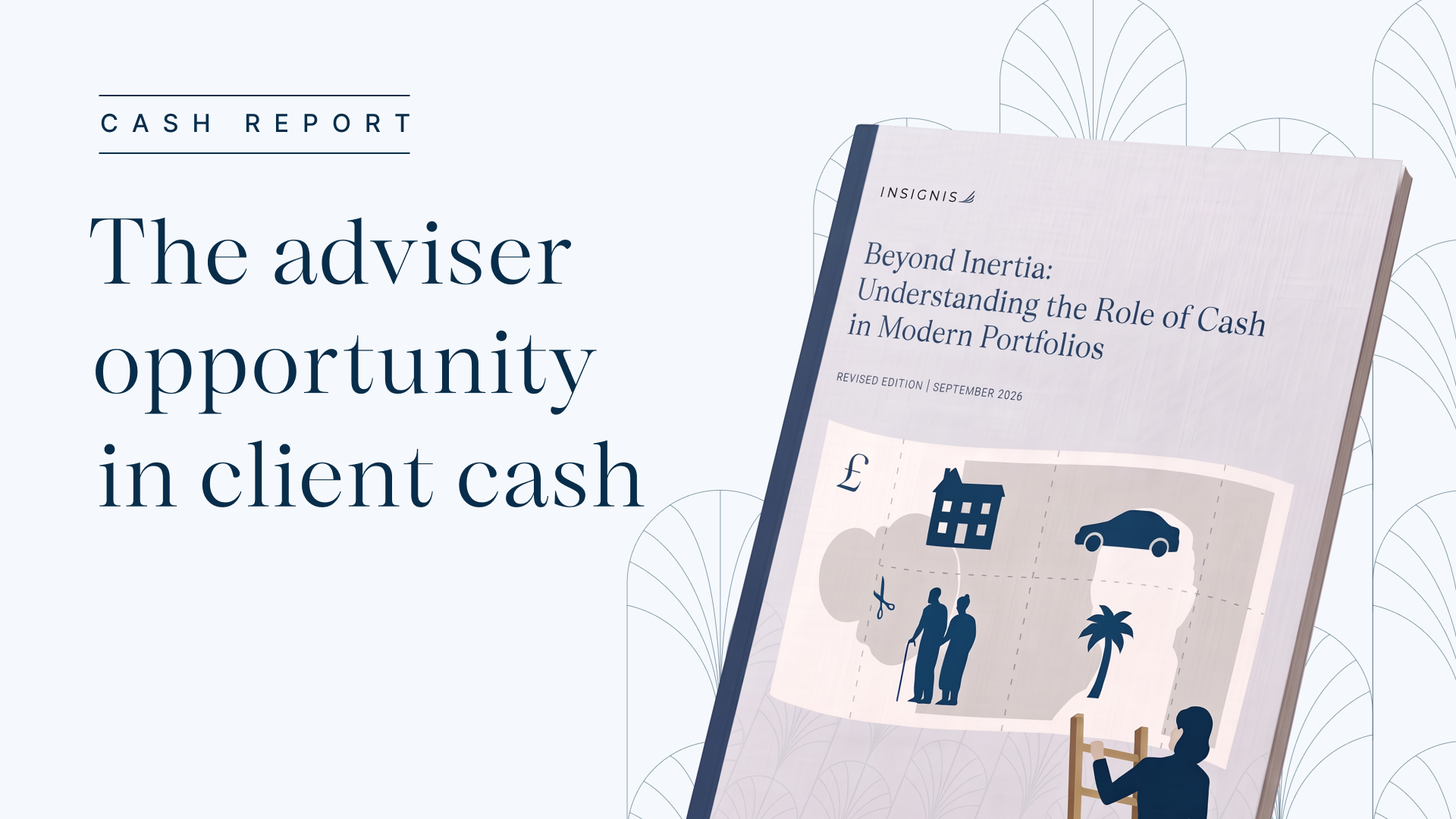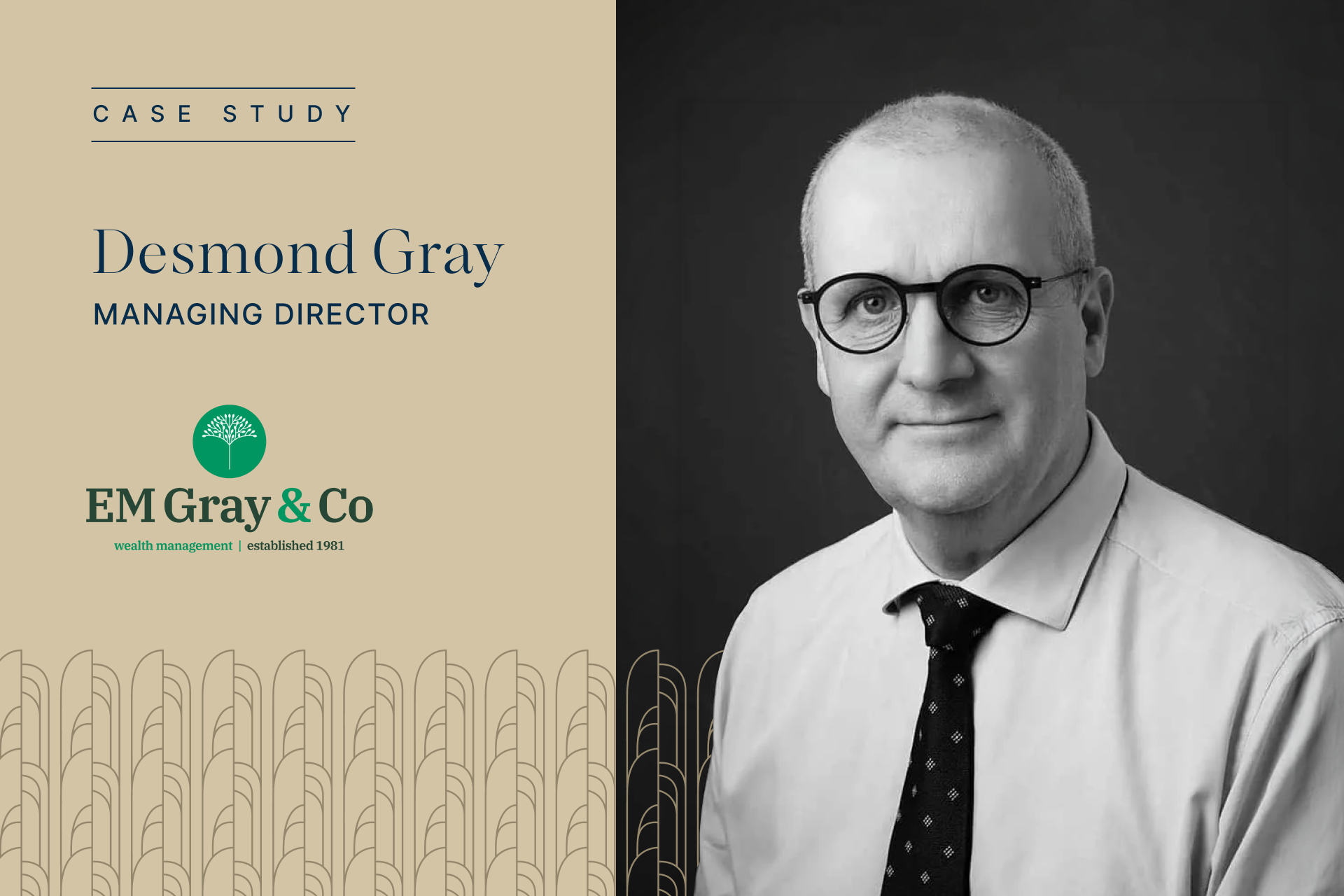
For Desmond Gray, good financial advice means looking at the whole picture. That includes the cash clients may have sitting on the sidelines. By incorporating Insignis into its client proposition, EM Gray & Co has found a simple way to help individuals and businesses make more of their cash, while adding another layer of value to the adviser relationship.
EM Gray & Co. Wealth Management was founded in Northern Ireland in 1981 by Desmond’s mother, Emma Maud Gray, whose initials gave the firm its name. Desmond joined the business in 1989 and has owned it since his mother retired in 1996. Today, the firm has 23 employees, including 13 advisers. Its clients span individuals and businesses, with advice covering everything from mortgages and pensions to investments, corporate pension schemes and inheritance tax planning.That breadth is important to Desmond. Rather than looking at one product or one part of a client’s finances in isolation, he takes a full-picture approach and that means asking about cash holdings.
EM Gray first began using Insignis in 2018. Desmond initially tried the platform with the firm’s own money after noticing that cash sitting in its current account was earning virtually nothing. What started with EM Gray’s own cash soon became part of Desmond’s conversations with clients. Even when interest rates were extremely low, the principle was simple. Earning something on surplus cash was better than earning nothing.
“Some of my big corporate clients had millions sitting in their current account getting no interest.”
Today, Desmond deliberately looks for that opportunity as part of his fact find. Alongside pensions, investments, ISAs and mortgages, he asks clients what they have sitting in current accounts. For an individual, that could mean £50,000 or £60,000. For a business owner, it can run into the millions.
“I always ask the question: have you any money sitting in your current account? Are you getting any interest? If not, I can sort that out for you.”
One recent conversation demonstrates just how valuable that question can be. A business client had around £1 million sitting in a current account. Desmond had discussed moving the money before, but the client was reluctant. He was concerned that putting the cash elsewhere meant somehow giving up control of it.
Then the business hired a new employee at a salary of around £50,000 a year. Suddenly, the potential return on that dormant cash became much more tangible.
At the rates available at the time, the client realised that putting the £1 million to work could potentially generate around £40,000 to £45,000 in interest over the year. In his mind, the interest could effectively cover most of the cost of that new employee. The money has since been allocated through Insignis and is earning interest.
“He twigged in his head: if I put that million away and get £40,000 or £45,000, that’ll pay his salary. I said: "Exactly.”
For Desmond, however, the value of cash management goes beyond the rate. EM Gray doesn’t charge clients an additional fee for using Insignis. Instead, Desmond sees it as part of the service the firm provides and another way to demonstrate the value of its wider advice.
“It’s more work, but I think it’s nice. We charge fees for the other business, and I think it justifies our fees.”
That approach also means EM Gray retains visibility over an asset that could otherwise sit outside the advice relationship. Desmond and his operations manager help clients manage the process, including transactions and reviewing what to do when deposits mature. For clients, cash becomes part of the broader financial conversation rather than something they are left to manage separately.
Desmond is clear that cash isn’t there to compete with longer-term investments. Instead, he sees the two as serving different purposes. For clients who need money readily available, he may use Insignis for emergency funds or shorter-term savings. Longer-term money can then be invested according to the client’s objectives and attitude to risk. One of EM Gray’s largest clients, for example, holds significant money through Insignis alongside his investments because he values having a mixture of secure cash and money taking investment risk.
“I use Insignis for an emergency fund. They could have maybe 10% to 20% of their savings that they have easy access to. Our investments are three to five years plus, whereas Insignis is short term.”
After using Insignis since 2018, Desmond’s advice to other wealth managers is straightforward. Cash shouldn’t be overlooked simply because it isn’t a traditional investment product.
For some clients it is an emergency fund. For others it is business working capital, money awaiting investment or simply a large balance that has accumulated in a current account. Identifying it and helping clients manage it more effectively can add another dimension to the adviser relationship.
“It’s another tool in a wealth manager’s toolbox to give good advice to clients. It gives the full package to your clients, which I think generates good business.”
Insignis works with financial advisers and wealth managers across the UK to get a clearer overview of clients’ savings and strategically diversify their cash to access higher interest rates while optimising FSCS coverage.
With Insignis, advisers and their clients can access 55+ banks and building societies with competitive rates and have full oversight of interest earned from a single platform.
Get in touch to find out how Insignis can work for you.
This case study was written by Lucy O’Boyle, Head of Content at Insignis
Insignis works with financial advisers and wealth managers across the UK to get a clearer overview of clients’ savings and strategically diversify their cash to access higher interest rates while optimising FSCS coverage. With Insignis, advisers and their clients can access 55+ banks and building societies with competitive rates and have full oversight of interest earned from a single platform.
8 Devonshire Square, London EC2M 4YJ
St John’s Innovation Centre, Cowley Rd, Milton, Cambridge CB4 0WS
+44 (0)1223 200 674